
Parkinson’s & Neurological Rehabilitation Physiotherapy at Home – Restore Movement & Independence
in Gurugram, Delhi NCR, Noida, Faridabad & Ghaziabad
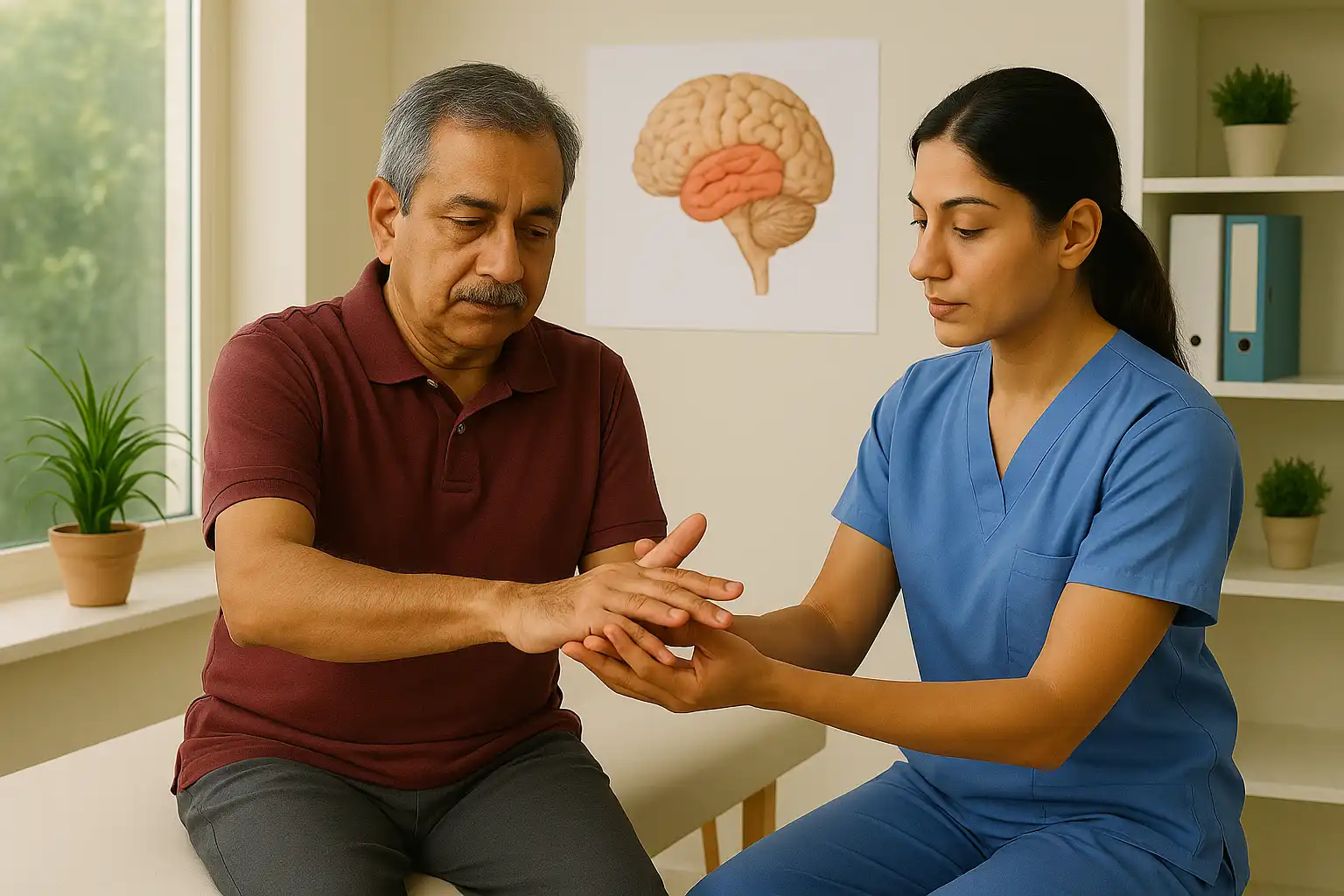
Understanding Parkinson’s & Neurological Rehabilitation
Neurological conditions like Parkinson’s disease, stroke, or neuropathy can affect balance, coordination, movement, and speech. Over time, these changes can make daily activities difficult and reduce independence. Our neurological physiotherapy programs help patients improve movement, stability, and confidence through structured exercises, balance training, and functional retraining — all delivered safely at home.
Parkinson’s & Neurological Rehabilitation Physiotherapy at Home – Restore Movement & Independence
in Gurugram, Delhi NCR, Noida, Faridabad & Ghaziabad
Conditions We Treat
Conditions We Treat
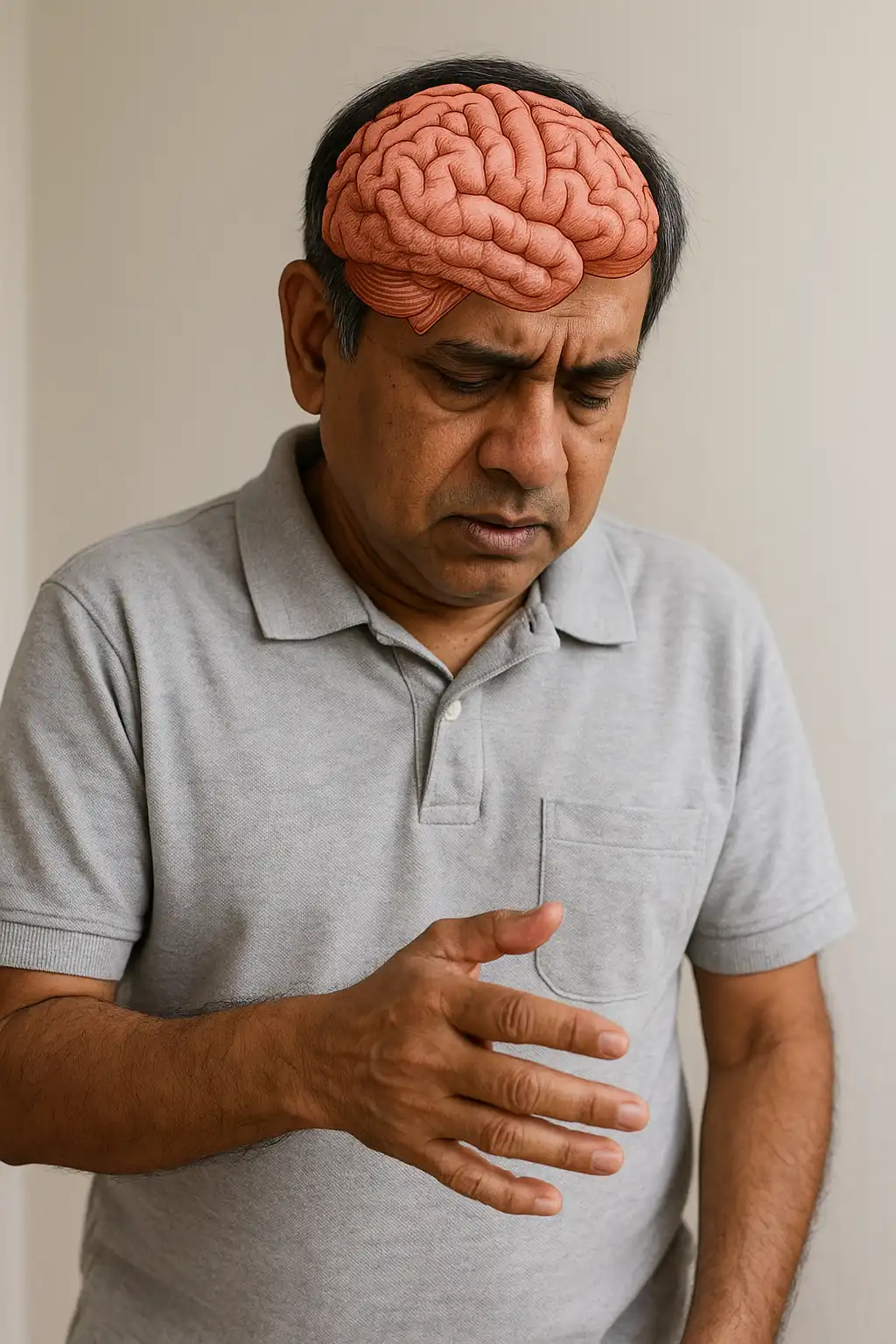
Parkinson’s Disease
Progressive neurological disorder causing tremors, stiffness, and movement slowness.
Parkinson’s Disease
Progressive neurological disorder causing tremors, stiffness, and movement slowness.
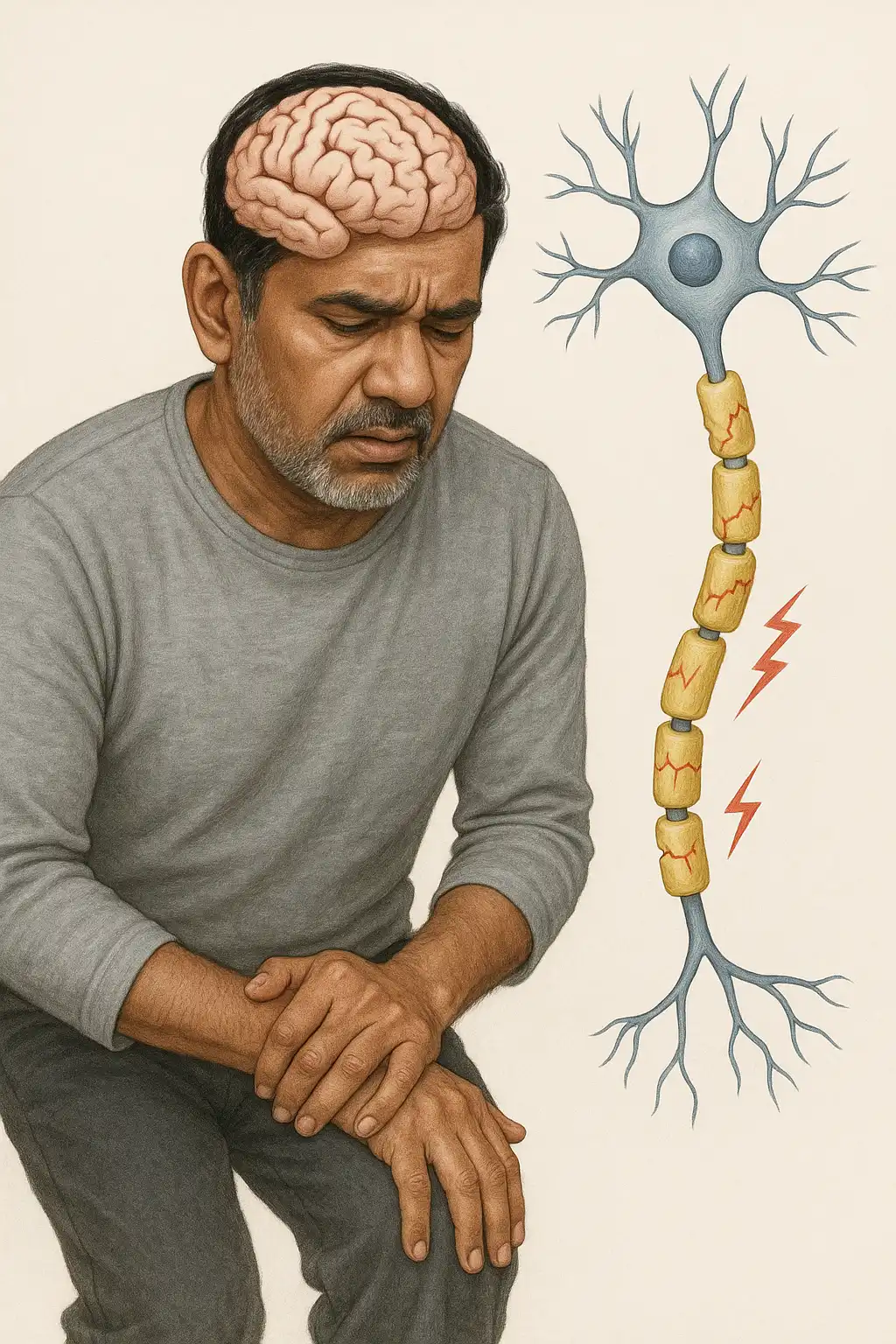
Multiple Sclerosis (MS)
Autoimmune disorder affecting nerve signals, leading to weakness and coordination loss.
Multiple Sclerosis (MS)
Autoimmune disorder affecting nerve signals, leading to weakness and coordination loss.
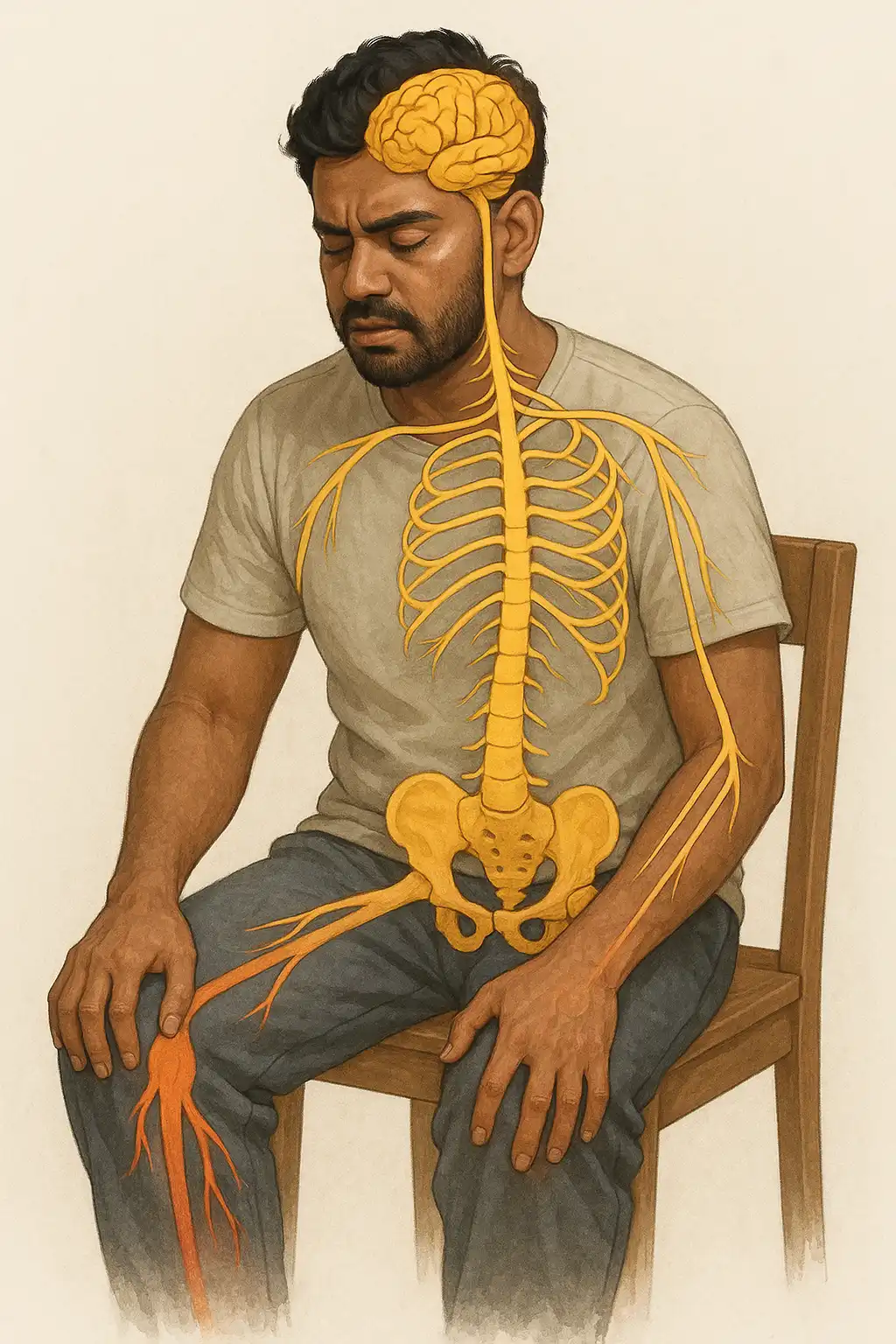
Guillain-Barré Syndrome (GBS)
Sudden-onset nerve inflammation causing muscle weakness and temporary paralysis.
Guillain-Barré Syndrome (GBS)
Sudden-onset nerve inflammation causing muscle weakness and temporary paralysis.
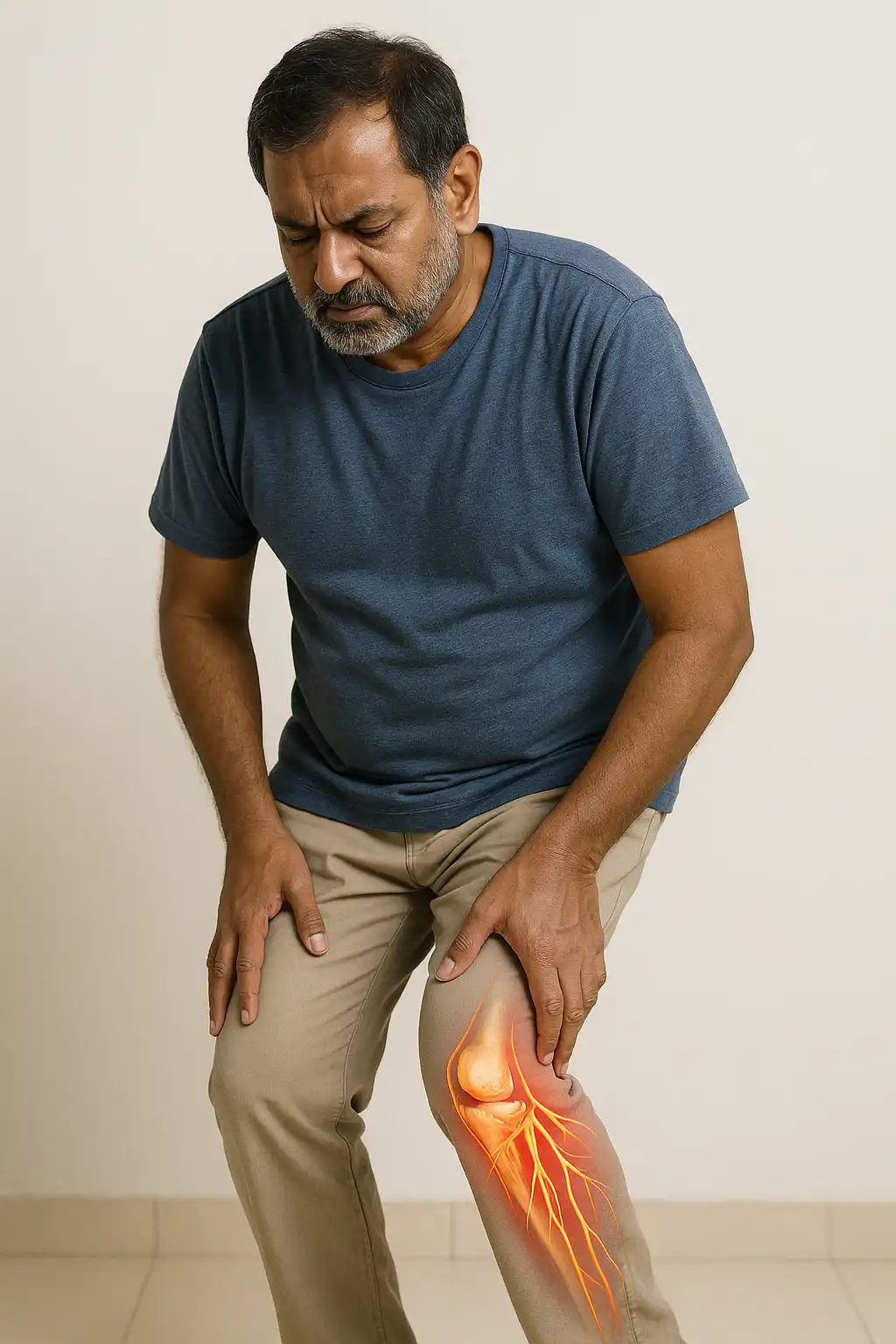
Peripheral Neuropathy
Nerve damage leading to numbness, tingling, and poor limb coordination.
Peripheral Neuropathy
Nerve damage leading to numbness, tingling, and poor limb coordination.
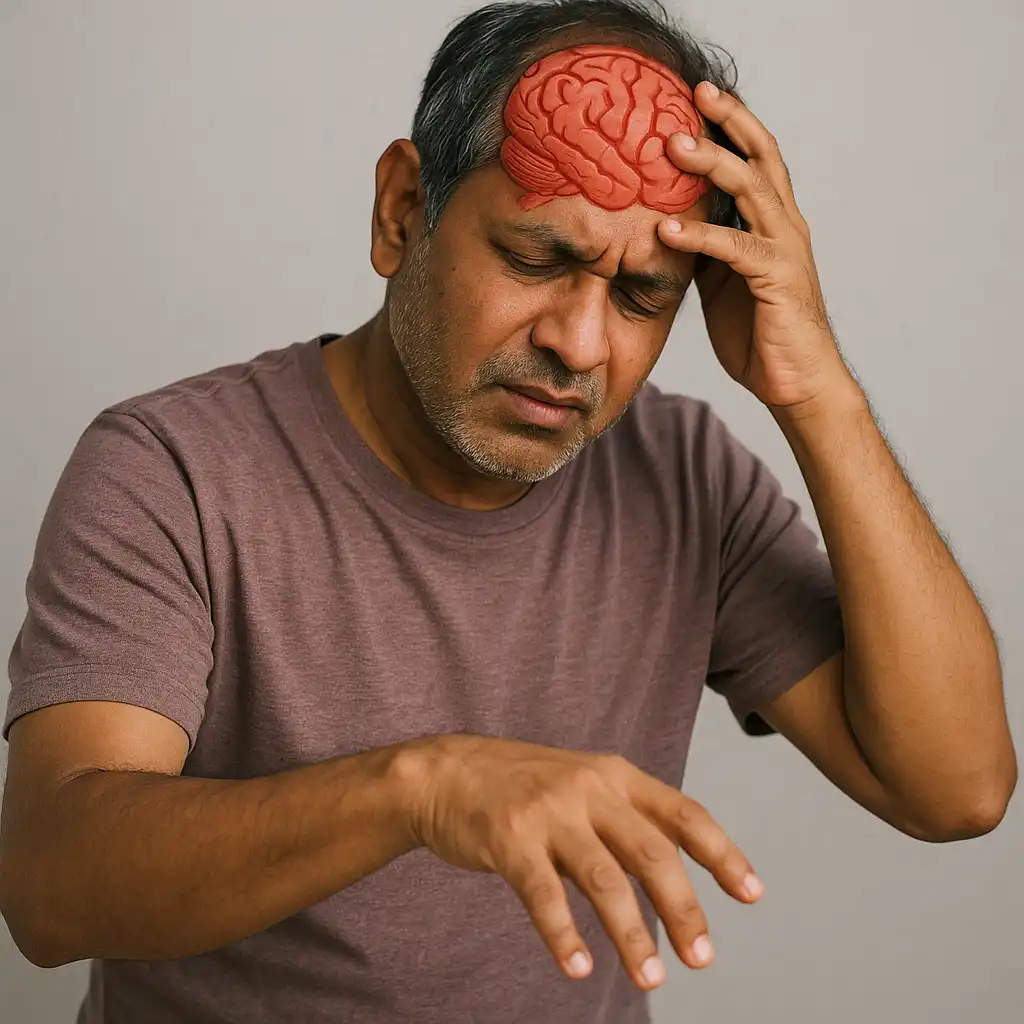
Traumatic Brain Injury (TBI)
Brain injury from impact resulting in movement, speech, or balance problems.
Traumatic Brain Injury (TBI)
Brain injury from impact resulting in movement, speech, or balance problems.
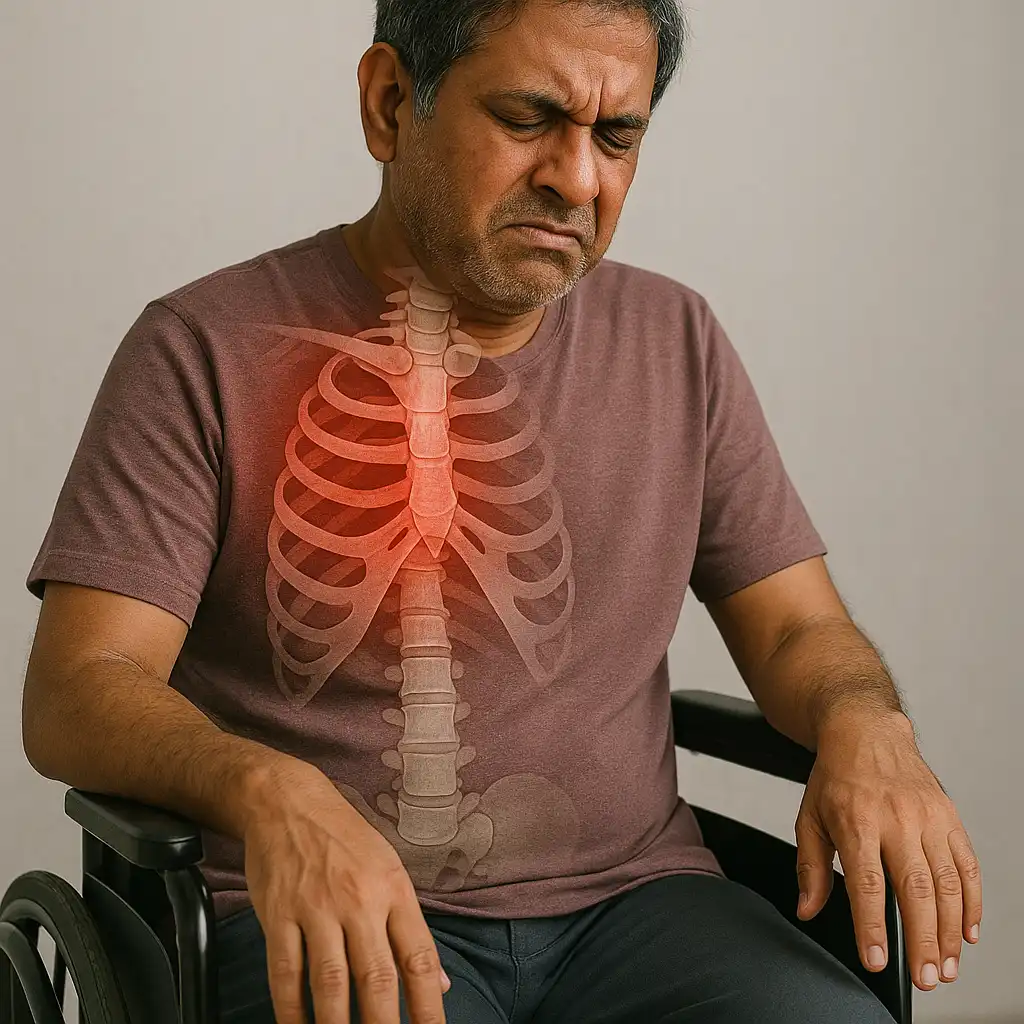
Spinal Cord Injury (SCI)
Loss of movement and sensation caused by spinal cord trauma or compression.
Spinal Cord Injury (SCI)
Loss of movement and sensation caused by spinal cord trauma or compression.
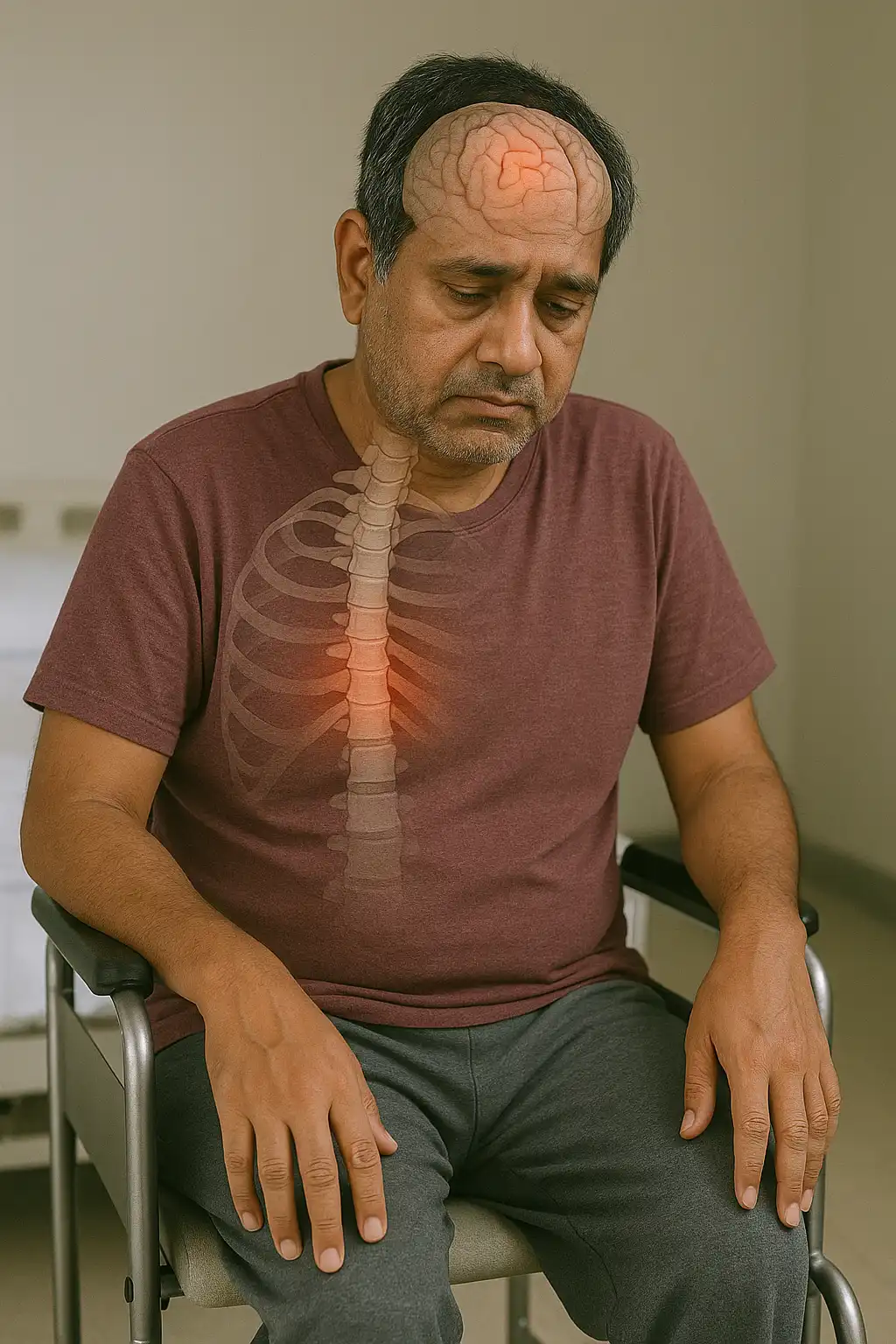
Brain Tumor Rehabilitation
Physical and neurological weakness following brain tumor surgery or treatment.
Brain Tumor Rehabilitation
Physical and neurological weakness following brain tumor surgery or treatment.
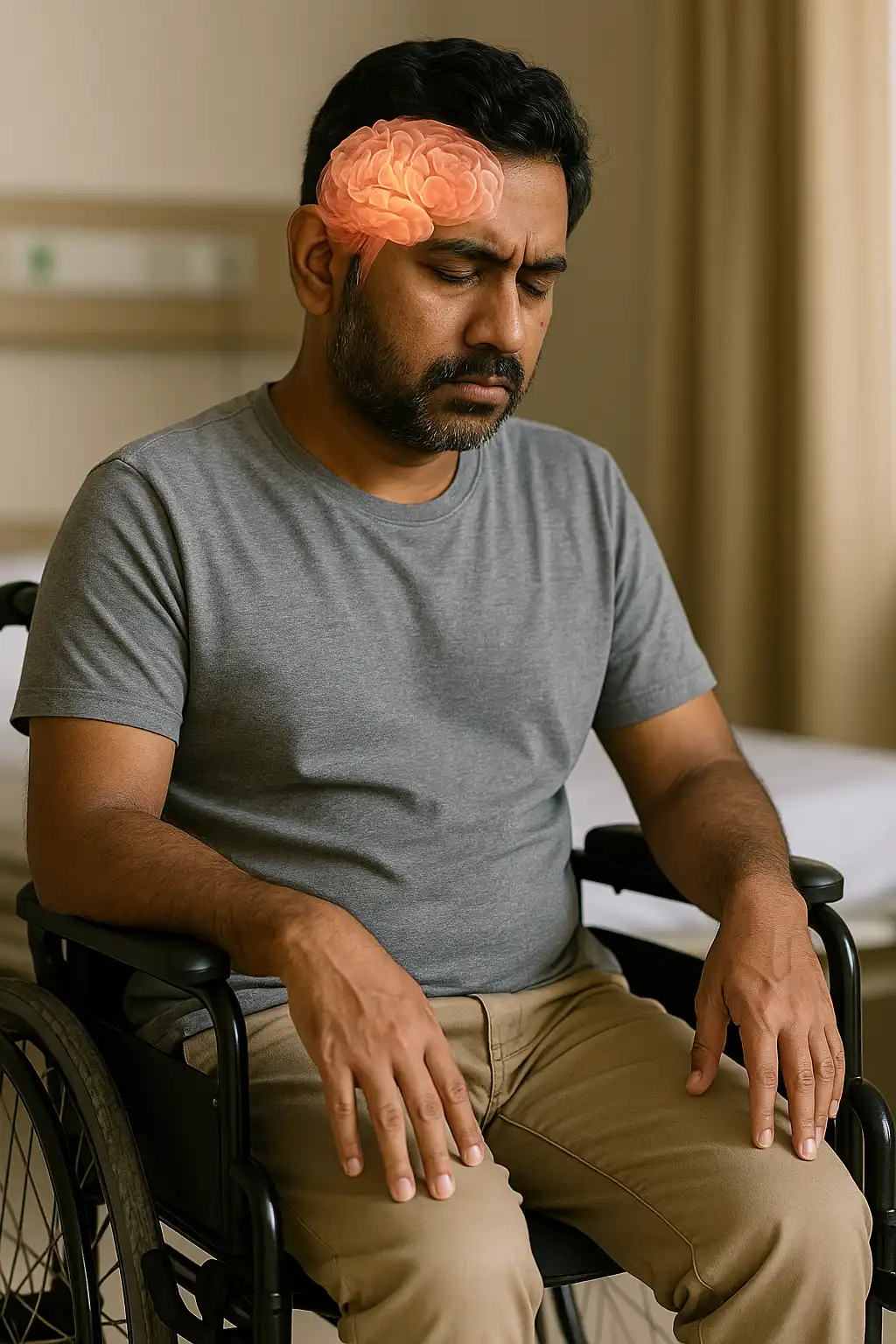
Paralysis
Partial or total muscle function loss due to nerve or brain damage.
Paralysis
Partial or total muscle function loss due to nerve or brain damage.
Overview
Common Causes of Neurological Impairment
Parkinson’s disease and related movement disorders
Stroke or brain injury
Multiple sclerosis (MS) or spinal cord injury
Peripheral neuropathy
Age-related neural degeneration
Genetic or autoimmune neurological conditions
Common Symptoms
Tremors or shaking in limbs
Slow or rigid movements (bradykinesia)
Poor balance and frequent falls
Difficulty walking or standing upright
Muscle stiffness or coordination issues
Speech and swallowing difficulties
Diagnosis & Assessment
Muscle tone, strength, and flexibility
Balance, gait, and coordination
Movement initiation and control
Posture and trunk stability
Functional ability in daily activities
Cognitive and sensory feedback response
How to Prevent Neurological Complications
Stay physically active with guided mobility exercises
Practice balance and coordination training regularly
Maintain correct posture during sitting and standing
Avoid prolonged immobility to prevent stiffness or muscle loss
Ensure a safe home environment to reduce fall risk
Follow prescribed medication and exercise routine consistently
Our Physiotherapy Approach for Parkinson’s & Neurological Conditions
Our Physiotherapy Approach for Parkinson’s & Neurological Conditions
Our focus is on restoring function, independence, and confidence in movement. We use a combination of:
Gait and balance training – to improve stability and walking pattern
Gait and balance training – to improve stability and walking pattern
Muscle strengthening and stretching – to reduce stiffness
Muscle strengthening and stretching – to reduce stiffness
Coordination and motor control exercises – for smoother movements
Coordination and motor control exercises – for smoother movements
Cueing techniques (visual, auditory) – to assist with movement initiation
Cueing techniques (visual, auditory) – to assist with movement initiation
Breathing and relaxation therapy – to enhance body control
Breathing and relaxation therapy – to enhance body control
Posture retraining and fall prevention education
Posture retraining and fall prevention education
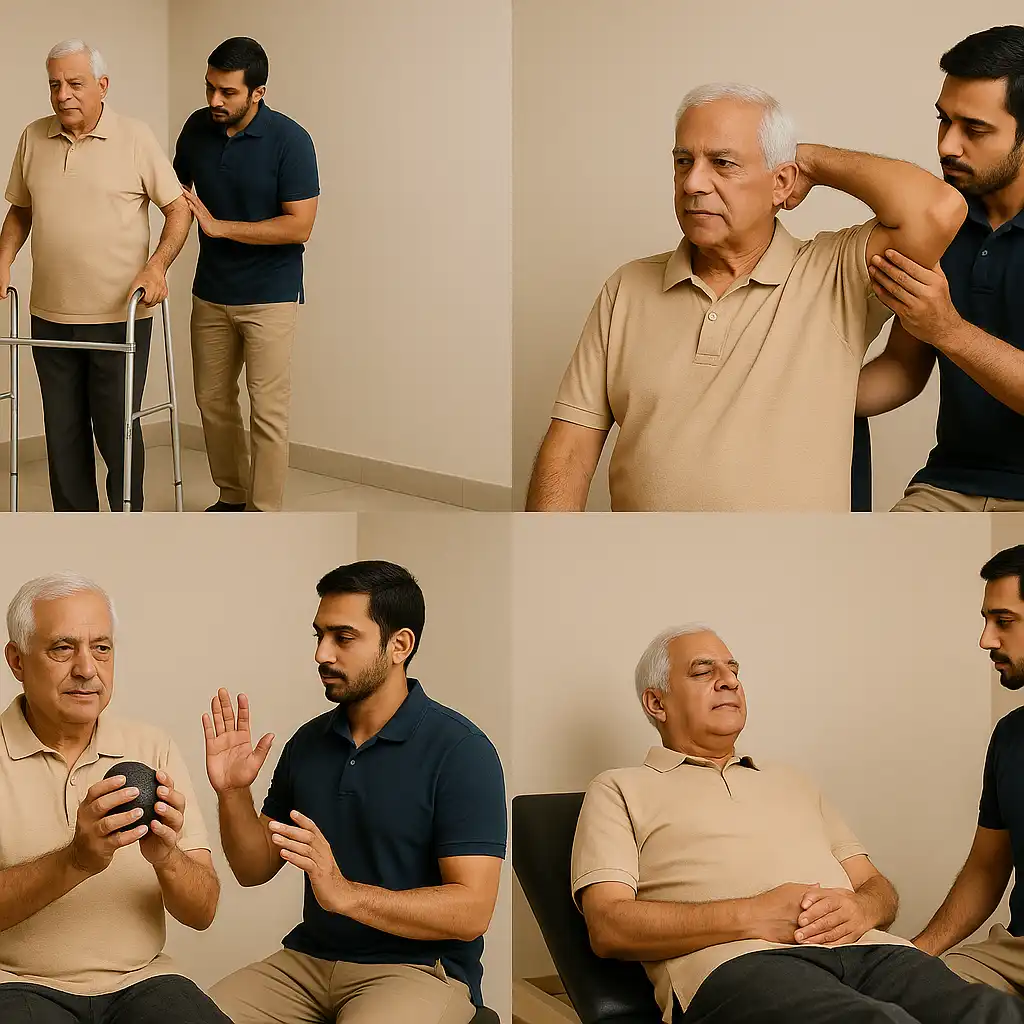
Home Physiotherapy for Parkinson’s & Neurological Rehabilitation in Gurugram, Delhi NCR, Noida, Faridabad & Ghaziabad
Home Physiotherapy for Parkinson’s & Neurological Rehabilitation in Gurugram, Delhi NCR, Noida, Faridabad & Ghaziabad
In-Person Sessions
In-Person Sessions
Virtual Sessions
Virtual Sessions
Focus Areas
Home physiotherapy allows neurological patients to recover and train in a familiar, safe environment, reducing stress and travel fatigue.
Benefits of Home Physiotherapy:

Convenient recovery without travel stress
Personalized exercise routines and equipment setup
Personalized, one-on-one care
Faster recovery through consistent sessions
Comfort of therapy in your own space
Whether in Gurugram, Delhi NCR, Noida, or Faridabad, our specialized neuro physiotherapists bring rehabilitation to your doorstep.
Why Choose Our Home Physiotherapy Services
1
Experienced neurological and Parkinson’s physiotherapists
2
Focus on mobility, balance, and coordination recovery
3
Affordable home care packages in Gurugram, Delhi NCR, Noida, Faridabad and Ghaziabad
FAQ
FAQ
Can stress really cause muscle pain and stiffness?
Can I combine physiotherapy with yoga or meditation?
Will posture correction help prevent stress-induced pain?
How can physiotherapy help relieve stress-related tension?
Can stress really cause muscle pain and stiffness?
Can I combine physiotherapy with yoga or meditation?
Will posture correction help prevent stress-induced pain?
How can physiotherapy help relieve stress-related tension?