
Ergonomic & Workplace Injury Management Physiotherapy at Home – Pain-Free Productivity
in Gurugram, Delhi NCR, Noida, Faridabad & Ghaziabad
Ergonomic & Workplace Injury Management Physiotherapy at Home – Pain-Free Productivity
in Gurugram, Delhi NCR, Noida, Faridabad & Ghaziabad
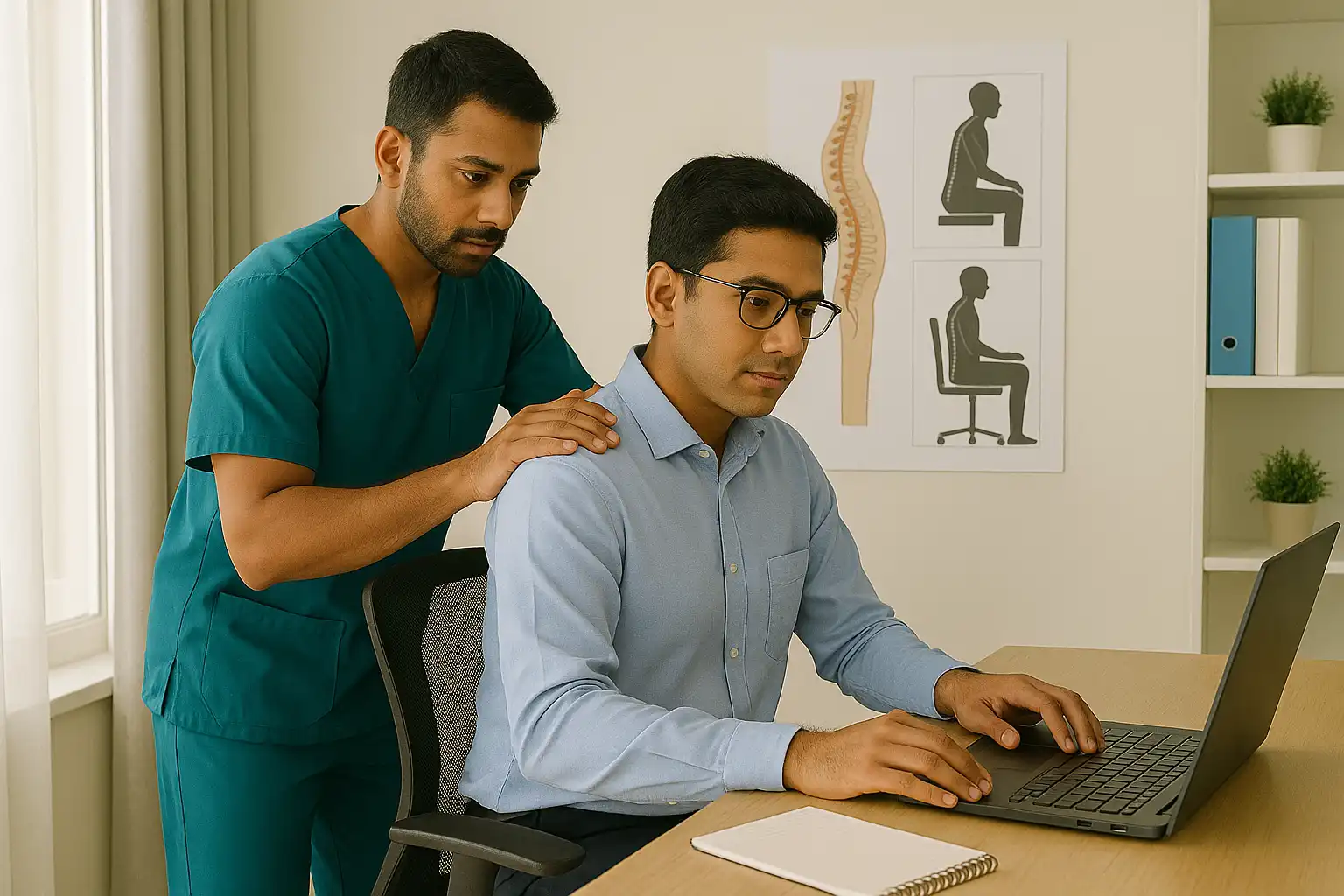
Understanding Ergonomic & Workplace Injury Physiotherapy
Modern work environments often involve long hours of sitting, repetitive movements, or improper posture — leading to chronic pain, muscle tension, and fatigue. Ergonomic and workplace injury physiotherapy focuses on assessing your work habits, correcting posture, and treating repetitive strain injuries (RSI) through guided exercises and ergonomic modifications. Our home-based sessions are designed for professionals who want lasting relief and improved comfort while working — without disrupting their schedule.
Conditions We Treat
Conditions We Treat

Repetitive Strain Injury (RSI)
Overuse of muscles and tendons from repetitive movements causing pain and stiffness.
Repetitive Strain Injury (RSI)
Overuse of muscles and tendons from repetitive movements causing pain and stiffness.

Desk Job Neck & Shoulder Pain
Tightness and discomfort from prolonged sitting and poor workstation posture.
Desk Job Neck & Shoulder Pain
Tightness and discomfort from prolonged sitting and poor workstation posture.

Carpal Tunnel Syndrome (CTS)
A nerve compression condition in the wrist causing pain, numbness, and weakness in the hand.
Carpal Tunnel Syndrome (CTS)
A nerve compression condition in the wrist causing pain, numbness, and weakness in the hand.

Sedentary Lifestyle Rehabilitation
Muscle weakness, stiffness, and poor posture caused by long hours of sitting or physical inactivity.
Sedentary Lifestyle Rehabilitation
Muscle weakness, stiffness, and poor posture caused by long hours of sitting or physical inactivity.

Work-Related Muscle Fatigue
Persistent tiredness and soreness in neck, back, or arms due to poor ergonomics.
Work-Related Muscle Fatigue
Persistent tiredness and soreness in neck, back, or arms due to poor ergonomics.
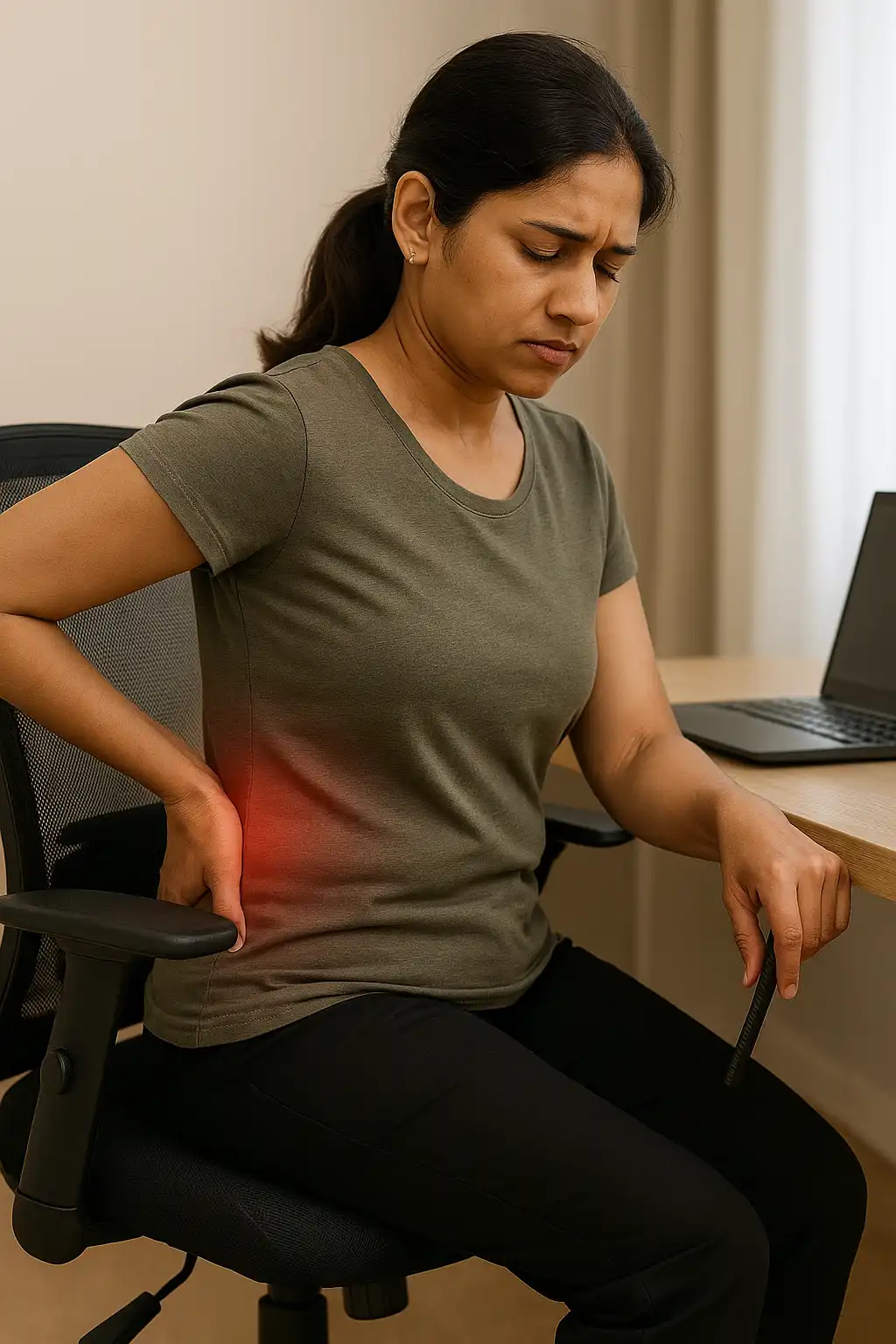
Ergonomic Assessments
(Home & Office)
Adjustment of workspace setup and posture habits to prevent pain and improve alignment.
Ergonomic Assessments
Adjustment of workspace setup and posture habits to prevent pain and improve alignment.
Overview
Common Causes of Workplace Injuries
Poor posture and incorrect workstation setup
Prolonged sitting or standing
Repetitive strain on wrists, neck, or back
Inadequate breaks or stretching
Poor lifting mechanics
Stress-related muscle tension
Common Symptoms
Neck, shoulder, or back pain after long work hours
Wrist or elbow pain from typing or mouse use
Headaches and eye strain
Tingling or numbness in hands or arms
Reduced mobility or fatigue during the day
Diagnosis & Assessment
Postural and ergonomic analysis of your workspace
Muscle and joint flexibility testing
Strength and endurance assessment
Repetitive movement pattern observation
Personalized workstation setup review
How to Prevent Workplace Pain and Injuries
Maintain neutral posture while sitting or standing
Adjust your chair and monitor height for ergonomic comfort
Take micro-breaks every 30–45 minutes
Stretch your neck, shoulders, and wrists regularly
Use lumbar and wrist support when needed
Practice regular core strengthening exercises
Our Physiotherapy Approach for Workplace Injury Management
Our Physiotherapy Approach for Workplace Injury Management
Our programs help correct posture, reduce strain, and improve strength to prevent future injuries. We use a combination of:
Posture correction and ergonomic training – for long-term comfort
Posture correction and ergonomic training – for long-term comfort
Strengthening and stretching exercises – to balance muscle use
Strengthening and stretching exercises – to balance muscle use
Manual therapy – to relieve muscle tension and stiffness
Manual therapy – to relieve muscle tension and stiffness
Workstation re-education – to set up your workspace correctly
Workstation re-education – to set up your workspace correctly
Core and stability exercises – for spinal support
Core and stability exercises – for spinal support
Stress management techniques – to reduce muscular tightness
Stress management techniques – to reduce muscular tightness
Home Physiotherapy for Workplace Injury Management
in Gurugram, Delhi NCR, Noida, Faridabad & Ghaziabad
Home Physiotherapy for Workplace Injury Management
in Gurugram, Delhi NCR, Noida, Faridabad & Ghaziabad
In-Person Sessions
In-Person Sessions
Virtual Sessions
Virtual Sessions
Focus Areas
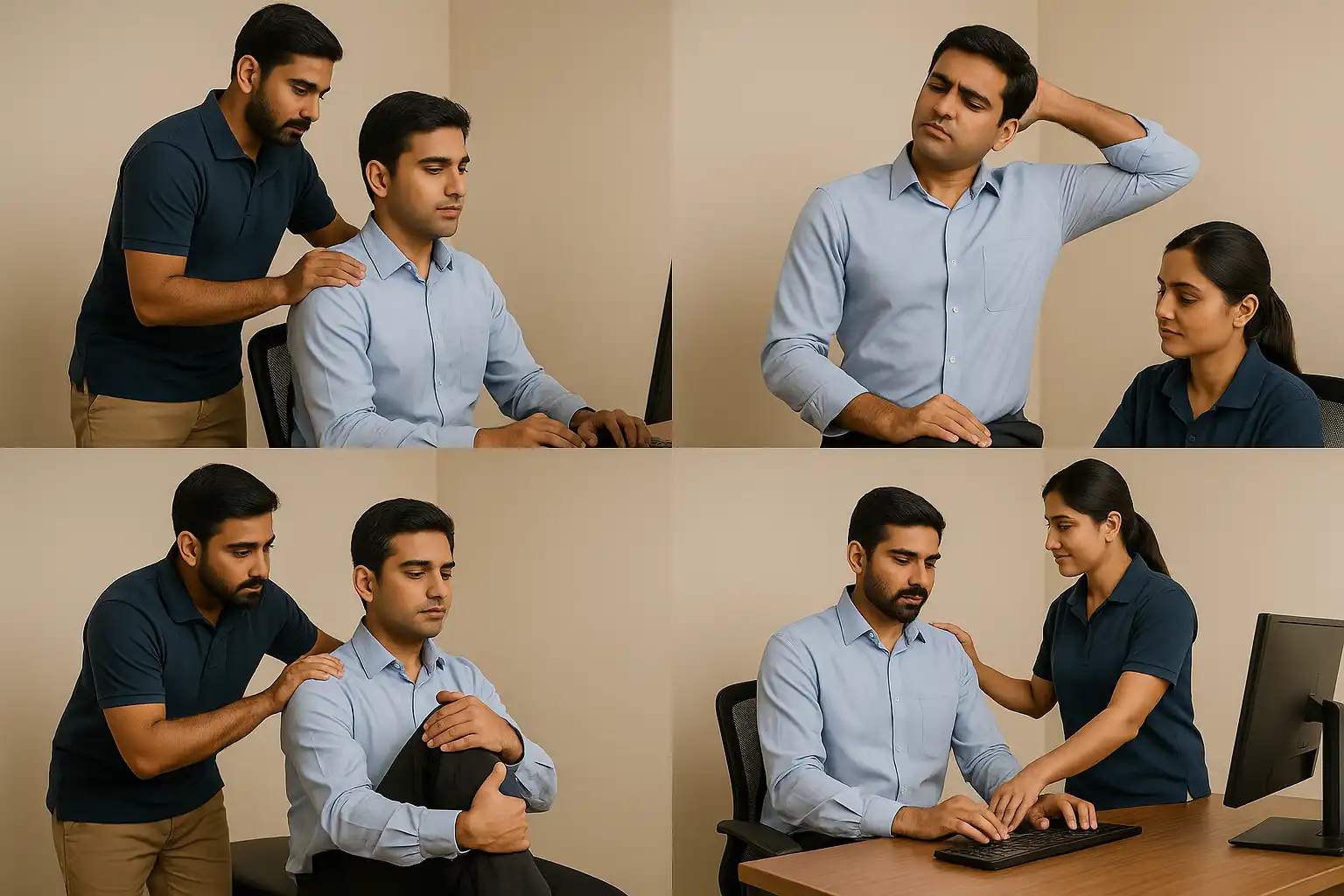
Our home physiotherapy sessions are ideal for professionals who work from home or office setups. We assess your environment, make ergonomic adjustments, and teach sustainable postural habits.
Benefits of Home Physiotherapy:

Ergonomic assessment at your actual workspace
Personalized corrective exercises for work-related pain
Reduced stiffness, fatigue, and tension
Improved productivity and posture
No travel or waiting time required
Our therapists provide ergonomic physiotherapy at home across Gurugram, Delhi NCR, Noida, and Faridabad.
Why Choose Our Home Physiotherapy Services
1
Certified physiotherapists specialized in ergonomic and posture care
2
Focus on pain relief, prevention, and productivity improvement
3
Personalized guidance for long-term spinal and joint health
FAQ
FAQ
Can stress really cause muscle pain and stiffness?
Can I combine physiotherapy with yoga or meditation?
Will posture correction help prevent stress-induced pain?
How can physiotherapy help relieve stress-related tension?
Can stress really cause muscle pain and stiffness?
Can I combine physiotherapy with yoga or meditation?
Will posture correction help prevent stress-induced pain?
How can physiotherapy help relieve stress-related tension?